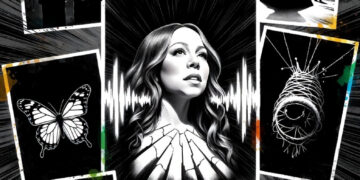
Brandi Carlile has always been a force in music, blending raw emotion with powerhouse vocals that cut straight to the heart. Born on June 1, 1981, in the quiet rural town of Ravensdale, Washington, she grew up in a modest home surrounded by woods, where she spent her childhood building forts and strumming guitars alongside her siblings. Music was her escape and her spark from an early age. By her teens, Carlile was sneaking into Seattle’s vibrant club scene, performing with the twin brothers Phil and Tim Hanseroth, who would become her lifelong bandmates and collaborators. That scrappy start in smoky bars laid the foundation for a career that’s now valued at an estimated $8 million, according to Celebrity Net Worth as of 2025. But this milestone isn’t just about numbers; it’s a testament to her evolution from underground folk darling to Grammy-winning icon, especially as she makes waves with her triumphant return to Saturday Night Live.
The buzz around Carlile’s finances couldn’t come at a more electric time. Just days ago, on November 2, 2025, she graced the SNL stage for her fourth appearance as musical guest, hosted by Miles Teller. Fans tuned in for two searing performances from her freshly released eighth studio album, Returning to Myself, dropped on October 25. Opening with the U2-tinged rocker “Church & State,” Carlile channeled themes of societal unrest and personal reckoning, her voice soaring over haunting arrangements co-written with producer Andrew Watt and the Hanseroth twins. Backed by the Milwaukee-based string duo SistaStrings—Chauntee and Monique Ross, who’ve been her touring staples since 2022—she delivered a performance that felt both urgent and intimate, the violins weaving through lyrics about a “failing empire.”
Her second slot, the sweeping ballad “Human,” stripped things back to raw vulnerability, highlighting the yin-yang production from Aaron Dessner of The National and Watt. Carlile’s delivery was a gut-punch, exploring the messy beauty of self-forgiveness amid parenthood and activism. “Heavy are the hands that you are free to slip right through,” she sang, adapting lines from her recent Elton John collaboration. This wasn’t just a set list; it was a reclamation. As she told Rolling Stone in a recent interview, the album emerged from post-COVID “toxic energy,” a deliberate pivot back to solo introspection after years of high-profile stewardship for other artists. Her SNL return—her second this year, following an April duet with Elton John promoting their joint project Who Believes in Angels?—has reignited chatter about her enduring appeal. Promo clips even captured her stealing the show with a deadpan joke about co-star Ashley Padilla’s haircut, outshining even Teller’s charm. With the performance, streams of Returning to Myself surged overnight, underscoring how Carlile, at 44, remains a cultural lightning rod.
That $8 million net worth reflects a career built on versatility and grit, far from the overnight success stories that dominate headlines. Carlile’s breakthrough arrived with her 2005 self-titled debut on Columbia Records, a collection of folk-rock gems like “Throw It All Away” that showcased her already mature songcraft. But it was 2007’s The Story that catapulted her into the spotlight. The title track became an anthem of devotion and ache—”All of these lines across my face tell you the story of who I am”—boosted by its use in General Motors ads and the 2008 Summer Olympics. The album went gold, earning her a devoted following and proving her crossover power in an industry that often silos artists by genre.
She didn’t rest on that momentum. Albums like 2009’s Give Up the Ghost and 2012’s Bear Creek deepened her Americana roots, with tracks like “Dreams” earning praise for their orchestral sweep. Her 2011 live album, recorded at Seattle’s Benaroya Hall with the Seattle Symphony, remains a fan favorite, transforming hits into symphonic epics under the late Paul Buckmaster’s arrangements—a nod to her love for Elton John, whose influence echoes in her melodic instincts. By 2015’s The Firewatcher’s Daughter, Carlile was headlining major tours, opening for acts like The Fray and Ray LaMontagne, and her first Grammy nod arrived for that record’s blend of country twang and rock edge.
The real explosion came in 2018 with By the Way, I Forgive You, her sixth album and a career pinnacle. Six Grammy nominations followed, including Album of the Year, with wins for Best Americana Album and Best American Roots Song for “The Joke,” a defiant ballad of resilience that resonated deeply in the Trump era. “I heard the sound of a storm comin’/Heard the roll of a thunder soul,” she belts, turning personal scars into universal anthems. That night at the 61st Grammys, Carlile became the most-nominated woman, a historic nod to her songwriting prowess. In These Silent Days in 2021 built on that, snagging ten nominations and three wins, including Best Rock Song for “Right on Time.” Her voice, often compared to a young Bonnie Raitt or a folk-infused Chris Stapleton, carries a gravelly depth that makes every note feel lived-in.
Beyond solo triumphs, Carlile’s wealth stems from her role as a musical architect. She’s produced Tanya Tucker’s 2019 comeback While I’m Livin’, which won Best Country Album and inspired the documentary The Return of Tanya Tucker: Featuring Brandi Carlile. Her work with Brandy Clark yielded the 2023 Grammy-winning “Dear Insecurity.” As co-founder of the country supergroup The Highwomen—with Maren Morris, Amanda Shires, and Natalie Hemby—their 2019 self-titled debut celebrated sisterhood and earned a Best Country Album nod. She’s curated festivals like Girls Just Wanna Weekend and Echoes Through the Canyon, platforms amplifying women in roots music. Collaborations with Elton John, Joni Mitchell (whom she helped revive via the 2022 Joni Jams), Alicia Keys, Dolly Parton, and even Soundgarden for a Rock Hall tribute underscore her connective tissue in the industry.
Philanthropy bolsters her legacy too. With wife Catherine Shepherd—married since 2012 and parents to daughters Evangeline and Elijah—Carlile founded the Looking Out Foundation in 2008. It has raised over $4 million for LGBTQ+ youth, racial justice, and environmental causes, including disaster relief for wildfires near her Washington home. Her 2021 memoir, Broken Horses, a No. 1 New York Times bestseller, peeled back the layers of her queer upbringing and artistic drive, earning two Emmys for its audiobook narration. Eleven Grammys, two Emmys, and an Oscar nod later, Carlile’s empire includes touring revenue—her 2026 Carlile’s the Human Tour kicks off in February across North America and Europe—plus endorsements and sync deals.
Yet amid the accolades, Carlile grapples with imposter syndrome, as she shared in a New York Times profile. “I see the whole path, from the first downbeat to the Grammy,” she said of her obsessive producing style. Returning to Myself captures that tension: tracks like “No One Knows Us” revisit her ’80s childhood (“Eighties movies and Everclear/What if we’re gay?”), while “Anniversary” whispers of marital milestones. It’s a homecoming, literally—recorded in her rural barn studio—balancing activism’s weight with human fragility. “When you find yourself alone, retrace your steps and come back home,” she sings on “A War With Time,” a mantra for these divided days.
As SNL clips go viral and her net worth solidifies at $8 million, Carlile isn’t chasing peaks; she’s mapping new paths. With Rock Hall performances looming and a world tour on the horizon, her story—equal parts ache and triumph—reminds us why she’s indispensable. In an era of fleeting hits, Brandi Carlile builds bridges, one soul-stirring note at a time. Her return isn’t just to the stage; it’s to herself, and we’re all richer for witnessing it.